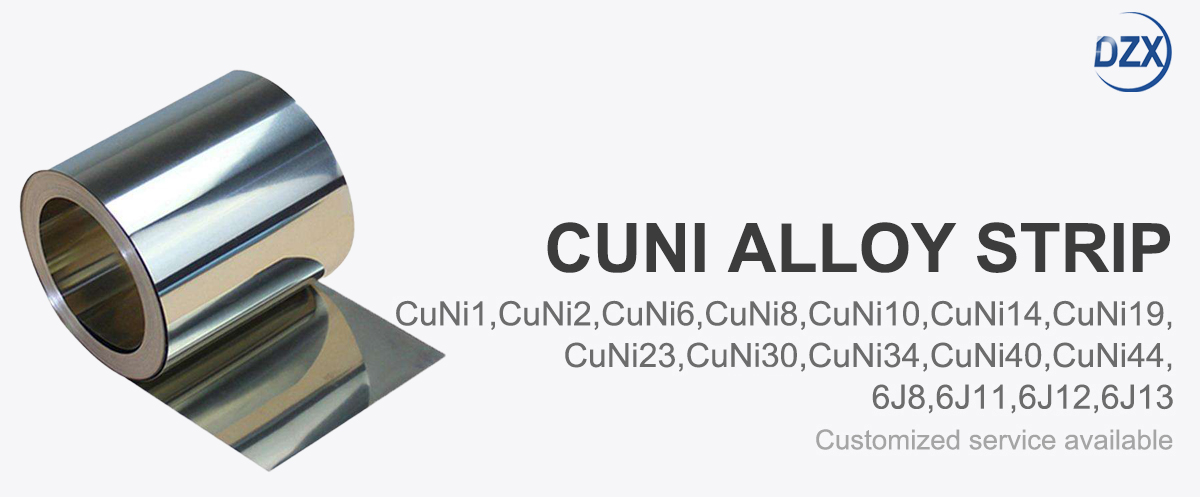
CuNi 90/10 coil strip is a copper-nickel alloy consisting of 90% copper and 10% nickel, often with trace amounts of iron and manganese to enhance strength and corrosion resistance. This alloy is specifically engineered for marine applications where seawater corrosion and biofouling are major concerns. The 90/10 composition provides an optimal balance of ductility, thermal conductivity, and resistance to stress corrosion cracking, making it ideal for long-term exposure in desalination plants, offshore platforms, and industrial cooling systems.
Applications
Desalination plant heat exchangers and evaporators
Marine piping systems for ships and offshore facilities
Condensers and cooling equipment in power plants
Industrial water treatment systems
Instrumentation and control applications in harsh environments
Industry Trend
The global desalination and marine engineering markets are expanding rapidly due to water scarcity, offshore energy projects, and industrial cooling demands. Materials with high corrosion resistance and long service life, like CuNi 90/10, are increasingly preferred over traditional stainless steels or mild steel components. Engineers and designers now seek alloys that reduce maintenance costs, resist fouling, and perform reliably under continuous operation in seawater or brackish water environments. The trend toward sustainable and recyclable materials further strengthens CuNi 90/10’s position as a leading marine-grade alloy.
Properties Material | Resistivity 200c μΩ.m | Max working temperature (℃) | Tensile strength (Mpa) | Melting point (℃) | Density (g/cm3) | TCR *10-6/℃ (20-600℃) | EMF vs Cu (μV/℃) (0-100℃) |
CuNi1 | 0.03 | 200 | 210 | 1085 | 8.9 | <100 | -8 |
CuNi2 | 0.05 | 200 | 220 | 1090 | 8.9 | <120 | -12 |
CuNi6 | 0.1 | 220 | 250 | 1095 | 8.9 | <60 | -18 |
CuNi8 | 0.12 | 250 | 270 | 1097 | 8.9 | <57 | -22 |
CuNi10 | 0.15 | 250 | 290 | 1100 | 8.9 | <50 | -25 |
CuNi14 | 0.2 | 300 | 310 | 1115 | 8.9 | <30 | -28 |
CuNi19 | 0.25 | 300 | 340 | 1135 | 8.9 | <25 | -32 |
CuNi23 | 0.3 | 300 | 350 | 1150 | 8.9 | <16 | -34 |
CuNi30 | 0.35 | 350 | 400 | 1170 | 8.9 | <10 | -37 |
CuNi34 | 0.4 | 350 | 400 | 1180 | 8.9 | 0 | -39 |
CuNi44 | 0.5 | 400 | 420 | 1200 | 8.9 | <-6 | -43 |
DZX specializes in CuNi 90/10 Coil Strips, producing marine-grade copper-nickel alloy solutions tailored for harsh desalination and offshore environments. Our strips combine high corrosion resistance, strength, and biofouling resistance, making them a reliable choice for evaporators, condensers, and seawater piping systems.
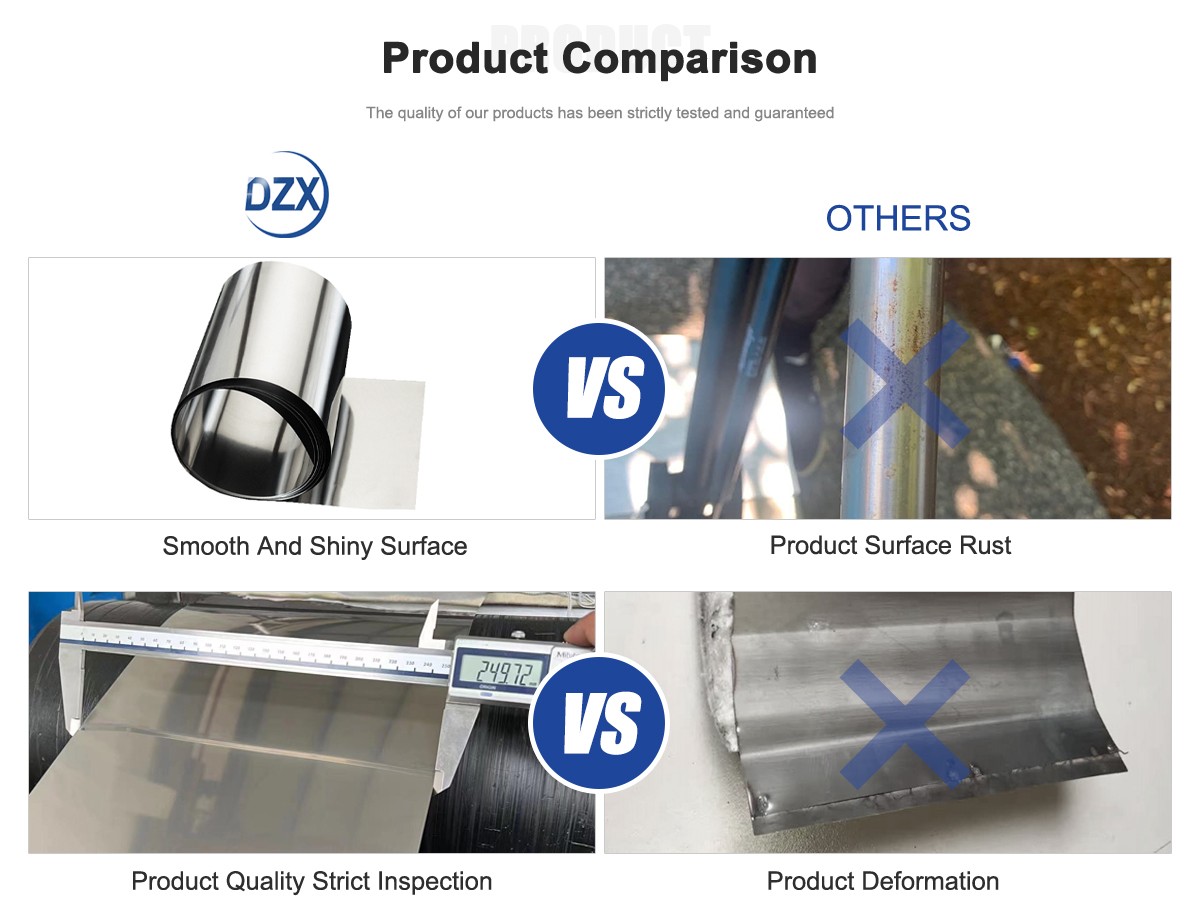
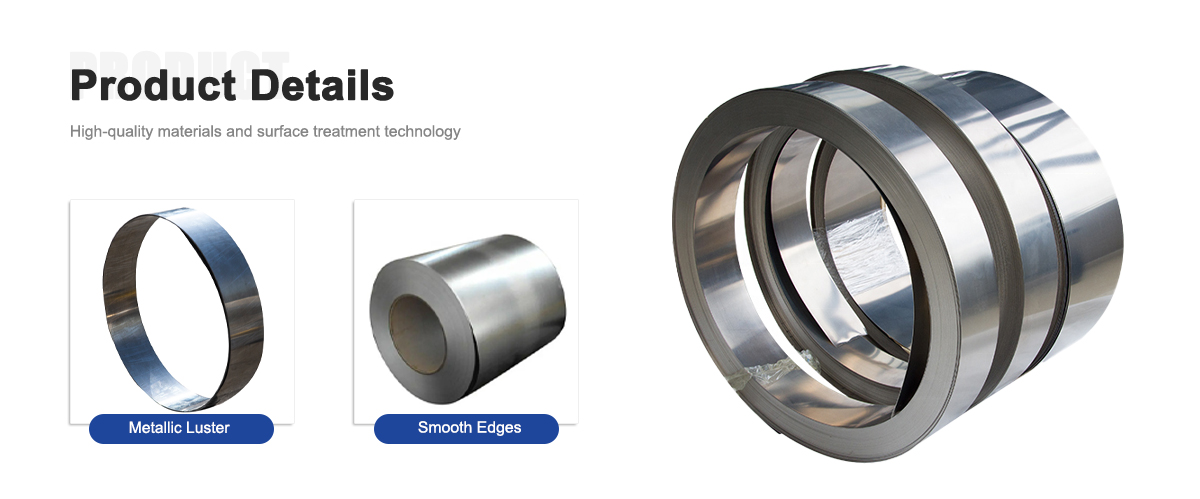
Unlike standard copper or stainless steel, DZX’s CuNi 90/10 maintains long-term performance in seawater and brackish water conditions, significantly reducing maintenance cycles and operational costs. Each coil strip is produced using precise alloying and controlled rolling processes, ensuring uniform thickness, superior surface finish, and consistent mechanical properties across every batch.
Comparison Table
| Property | CuNi 90/10 | CuNi 70/30 | CuNi 44 (Constantan) |
|---|
| Composition (Cu/Ni) | 90/10 | 70/30 | 56/44 |
| Density (g/cm³) | 8.9 | 8.9 | 8.9 |
| Tensile Strength (MPa) | 340–380 | 450–500 | 380–420 |
| Yield Strength (MPa) | 105–130 | 150–200 | 120–150 |
| Elongation (%) | 30 | 25 | 25 |
| Corrosion Resistance | Excellent in seawater | Superior | Good |
| Thermal Conductivity (W/m·K) | 50 | 30 | 40 |
| Applications | Desalination, marine piping | Heat exchangers | Electrical, resistors |
Marine and Industrial Applications
Desalination plants and offshore facilities demand materials that can withstand continuous exposure to corrosive water. DZX’s CuNi 90/10 coil strips excel in these conditions, providing exceptional oxidation resistance, thermal conductivity, and structural stability. Engineers rely on our alloy strips to prevent biofouling and resist stress corrosion cracking, which is critical for heat exchangers and marine pipelines.
Industry Trends
As global water scarcity increases, desalination technology is becoming more widespread, and the demand for corrosion-resistant alloys is rising. Engineers prioritize materials that offer long-term durability, reliability, and sustainable performance. CuNi 90/10 aligns perfectly with these needs, enabling systems that are both efficient and environmentally friendly.
DZX Advantage
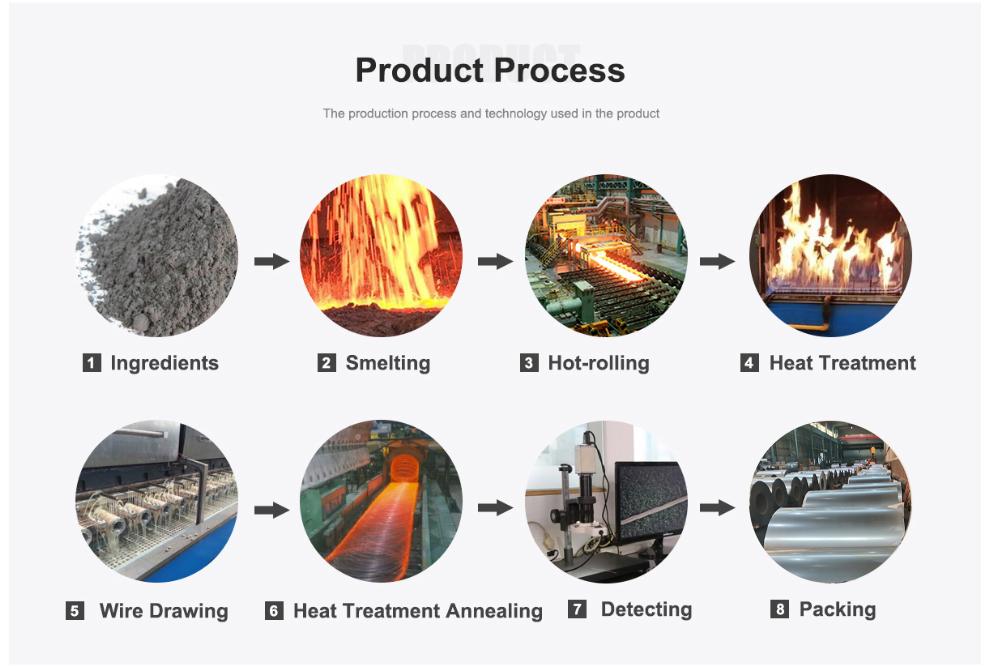
DZX’s vertical integration—from smelting to coil production—ensures that every CuNi 90/10 strip meets strict quality and performance standards. Our production team controls every step, including chemical composition, rolling, annealing, and finishing, guaranteeing consistent tensile strength, ductility, and corrosion resistance.
We offer a variety of coil thicknesses and widths, with custom sizes available for specific design requirements. DZX’s quality control system includes mechanical testing, corrosion testing, and dimensional verification, ensuring that our alloy strips meet or exceed ASTM, DIN, and ISO standards.
Our technical support team works closely with clients to select the right grade and provide advice on welding, forming, and installation practices. This collaborative approach ensures optimized performance in applications like desalination plant condensers, marine piping networks, and industrial cooling systems.
Sustainability and Longevity
CuNi 90/10 is fully recyclable and requires minimal maintenance due to its resistance to corrosion and biofouling. Choosing DZX’s alloy strips not only enhances system performance but also contributes to sustainable operations by reducing replacement frequency and extending the service life of equipment.
Whether for a new desalination project, upgrading an offshore facility, or constructing marine pipelines, DZX’s CuNi 90/10 coil strips deliver unmatched reliability, corrosion resistance, and operational efficiency. Our expertise in alloy production and commitment to quality make us the preferred supplier for industries requiring high-performance marine-grade materials.
By leveraging DZX’s production capabilities, clients can confidently specify CuNi 90/10 coil strips in high-pressure seawater systems, heat exchangers, and industrial water treatment setups, knowing they are investing in durable, efficient, and environmentally responsible alloy solutions.
About Us:
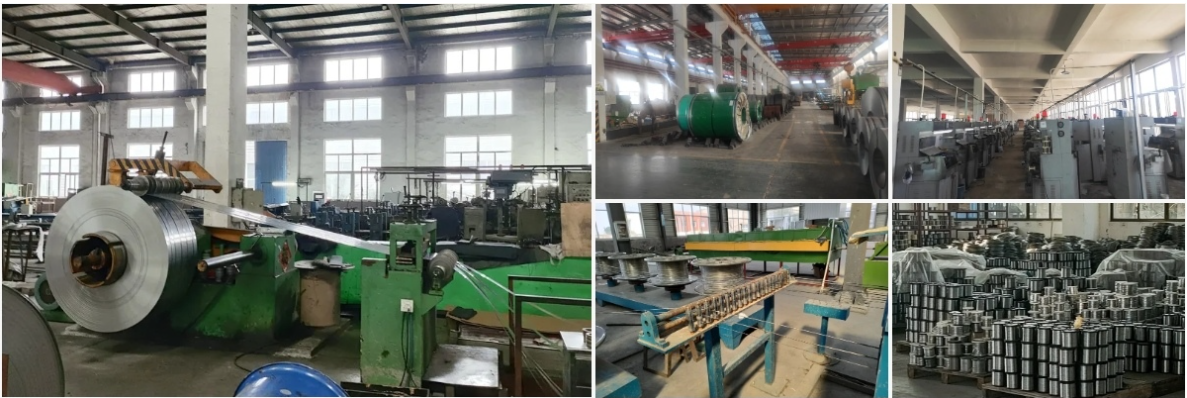
Our 12,000㎡ factory is equipped with complete capabilities for research, production, testing, and packaging. We strictly adhere to ISO 9001 standards in our production processes, with an annual output of 1,200 tons. This ensures that we meet both quantity and quality demands. Furthermore, all products undergo rigorous simulated environment testing including high temperature, high pressure, and corrosion tests before being dispatched, ensuring they meet customer specifications. For all our clients, we offer timely and multilingual after-sales support and technical consulting, helping you resolve any issues swiftly and efficiently.
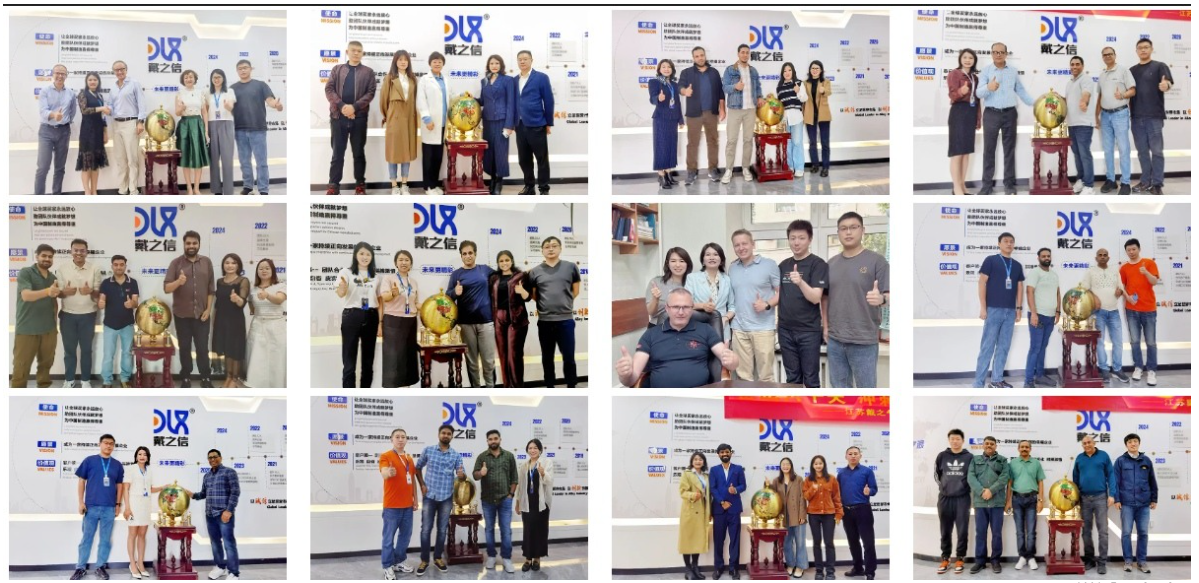
Client Visits
Building Stronger Partnerships
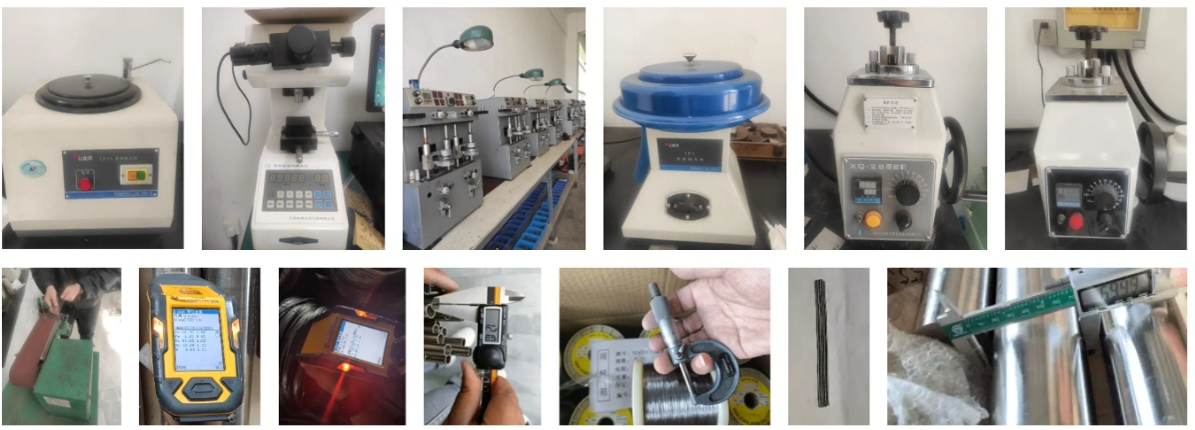
We support all kinds of testing:

Q1: What is the chemical composition of CuNi 90/10?
A1: CuNi 90/10 consists of 90% copper, 10% nickel, with small additions of iron and manganese to improve corrosion resistance and mechanical properties.
Q2: Why is CuNi 90/10 preferred in desalination plants?
A2: Its resistance to seawater corrosion, biofouling, and stress cracking makes it ideal for evaporators, condensers, and piping systems.
Q3: Can CuNi 90/10 coil strips be welded or formed easily?
A3: Yes, the alloy offers excellent workability, allowing welding, bending, and forming without compromising corrosion resistance.
Q4: What is the typical thickness range for CuNi 90/10 coil strips?
A4: Standard thickness ranges from 0.2 mm to 5 mm, depending on the application and design requirements.
Q5: How does CuNi 90/10 perform compared to stainless steel in marine applications?
A5: CuNi 90/10 offers superior corrosion resistance in seawater and reduces biofouling, leading to lower maintenance costs than stainless steel.
Q6: Is CuNi 90/10 environmentally friendly?
A6: Yes, the alloy is fully recyclable and has a long service life, aligning with green manufacturing and sustainability practices.
Q7: Can CuNi 90/10 coil strips handle high-pressure seawater systems?
A7: Absolutely, the alloy’s mechanical strength and ductility allow it to perform reliably under high-pressure conditions.
Q8: What industries benefit most from CuNi 90/10 coil strips?
A8: Desalination, shipbuilding, offshore energy, power generation, and industrial water treatment systems benefit from this corrosion-resistant alloy.


